


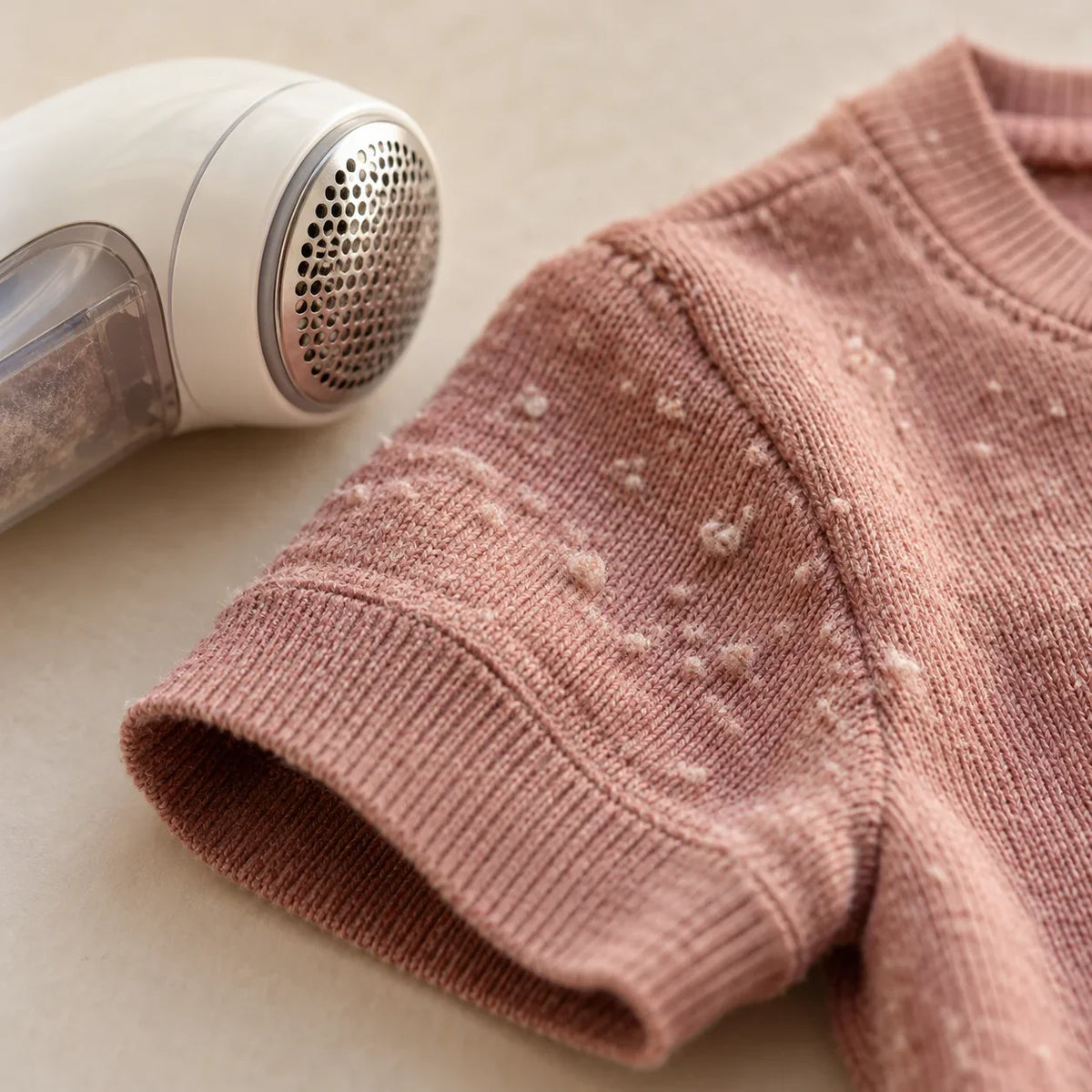
Pull out your child’s favorite sweatshirt and there they are: tiny fuzzy balls clustered on the elbows and under the arms. It looks worn out, even if the sweatshirt is only a few months old. That’s pilling, and it happens to almost every fabric at some point.
What Is Pilling?
Pilling is when small, tangled balls of fiber form on the surface of a fabric. Short or loose fibers on the surface rub against each other, break, twist together, and roll into little knots. Friction is almost always the cause.
That’s why pilling shows up in the same places again and again: elbows, underarms, inner thighs, and anywhere a backpack strap or car seat harness presses against the fabric.
Which Fabrics and Blends Pill the Most?
Not every fabric pills the same way. Acrylic is one of the worst offenders, and polyester isn’t far behind. Both are strong synthetics, so once a pill forms, it clings on instead of falling off. Nylon is tough and tends to pill less, though it can still fuzz with heavy rubbing. Cotton does pill, but its short fibers usually break away over time, so pills don’t stick around as long. Blends, especially cotton-polyester, often pill noticeably, because the polyester traps the loose cotton fibers.
Why Kids’ Clothes Pill So Fast
Kids create friction constantly. They crawl, slide, lean on desks, drag backpacks, and buckle in and out of car seats. All that rubbing wears down the surface of the fabric much faster than it would on an adult’s wardrobe.
A few other things make it worse:
-
Short fibers. Fabrics made with shorter fibers have more loose ends that can work their way to the surface.
-
Loose knits. Soft knit fabrics like sweaters and sweatshirts tend to pill more than tightly woven ones.
-
Fiber blends. Synthetic fibers are strong, so once a pill forms, it often stays put instead of falling off. That’s why a blend can look fuzzy for a long time.
-
Washing. Every wash cycle adds a bit more friction, especially when clothes are tossed in with heavier items like jeans or towels.
Is Pilling a Sign of Poor Quality?
Not always. Even good fabrics can pill with heavy use. But if a garment starts pilling after only a few wears, it’s often a sign the fibers are short or the fabric is loosely made. That’s one reason fabric quality is worth paying attention to when you shop for kidswear, and it’s something One Friday keeps in mind when choosing fabrics for everyday pieces.
How to Prevent Pilling
You can’t remove friction from a kid’s day, but you can reduce how much your clothes take on:
-
Turn clothes inside out before washing. This protects the outer surface from rubbing.
-
Use a gentle cycle and cold water. Both are easier on the fibers.
-
Wash similar fabrics together. Keep soft knits away from jeans, zippers, and anything rough.
-
Don’t overload the machine. A crowded drum means more rubbing.
-
Air dry when you can. Dryer tumbling adds extra friction.
How to Remove Pills Safely
If pills have already formed, don’t pull them off by hand, since that can tug the fabric and loosen more fibers. A fabric shaver or a sweater comb works much better. Lay the garment flat, glide the tool gently over the pilled areas, and brush away the lint. It takes a couple of minutes and can make a sweatshirt look new again.
What to Look For When Shopping
Check the label first. Fabrics made from longer fibers or a tighter weave usually pill less than loose, fuzzy knits. Run your hand over the surface. If it already feels fluffy, it will probably pill sooner. Rub a small patch of fabric against itself for a few seconds and see if it starts to fuzz. Look closely at the elbows, underarms, and seat, since these areas wear first. Finally, check the fiber content for acrylic or high polyester blends if low-pill clothes matter to you.
The Takeaway
Pilling is mostly about friction, and kids are very good at creating it. Choosing well-made fabrics, washing with a little care, and removing pills gently will keep everyday kidswear looking fresh for longer. One Friday’s kidswear collection is a good place to start, with comfortable pieces made for real, everyday wear.
Author Bio
The One Friday Editorial Team brings years of experience in children’s fashion and retail to deliver well-researched, trustworthy content. We carefully curate style tips, product insights, and practical advice to help parents make informed choices for their children’s wardrobes. Dedicated to quality and authenticity, we ensure every post reflects One Friday’s commitment to comfort, style, and the evolving needs of families.
Popular Searches
Blazer For Boys | Fashionable T shirt for girls | Kids Footwear | Small Girls Dress | Party wear Dress for Boys | Clothes for infants | Girls Party Shoes | Summer Wear for Kids | Kids accessories | Kids Clothing








Share:
How to Save Money on Kids’ Clothes: 15 Parent-Tested Tips
Layered Dresses for Girls: Styling Dresses for Colder Days