


Most of us check the size, the price, and maybe the fabric tag when we buy kids clothing. Hardly anyone asks what was used to color it. But the dye on your child’s t-shirt is a chemical, and if you’ve ever seen “azo-free” on a label, it’s fair to wonder what it means and whether it matters.
What are azo dyes?
Azo dyes are a large family of synthetic textile dyes. What sets them apart is a particular chemical bond in their structure, written as -N=N-. They’re popular because they’re cheap and produce bright, lasting colors.
The concern is that some azo dyes can break down into compounds called aromatic amines, and some of those have been linked to cancer and toxicity. That’s why the term “azo-free” exists. On clothing labels, it means the fabric was colored without azo dyes that can release these restricted amines. Not every azo dye does this, which is why certifications matter more than the word alone (more on that below).
Why it matters more for kids
Children’s skin is thinner and more permeable than an adult’s, so it absorbs chemicals more easily. Dye chemicals and other textile chemicals that an adult might not react to can bother a child. Azo-free clothing is linked to a lower risk of allergic reactions, contact dermatitis, eczema flare-ups, and rashes.
Then there’s the way babies and toddlers behave. They chew on sleeves, suck on hems, and gnaw collars. That means more direct, oral contact with whatever residue is on the fabric. If you’ve ever pulled a damp, chewed-on sleeve out of a toddler’s mouth, you can see why this matters.
Look for labels, not just claims
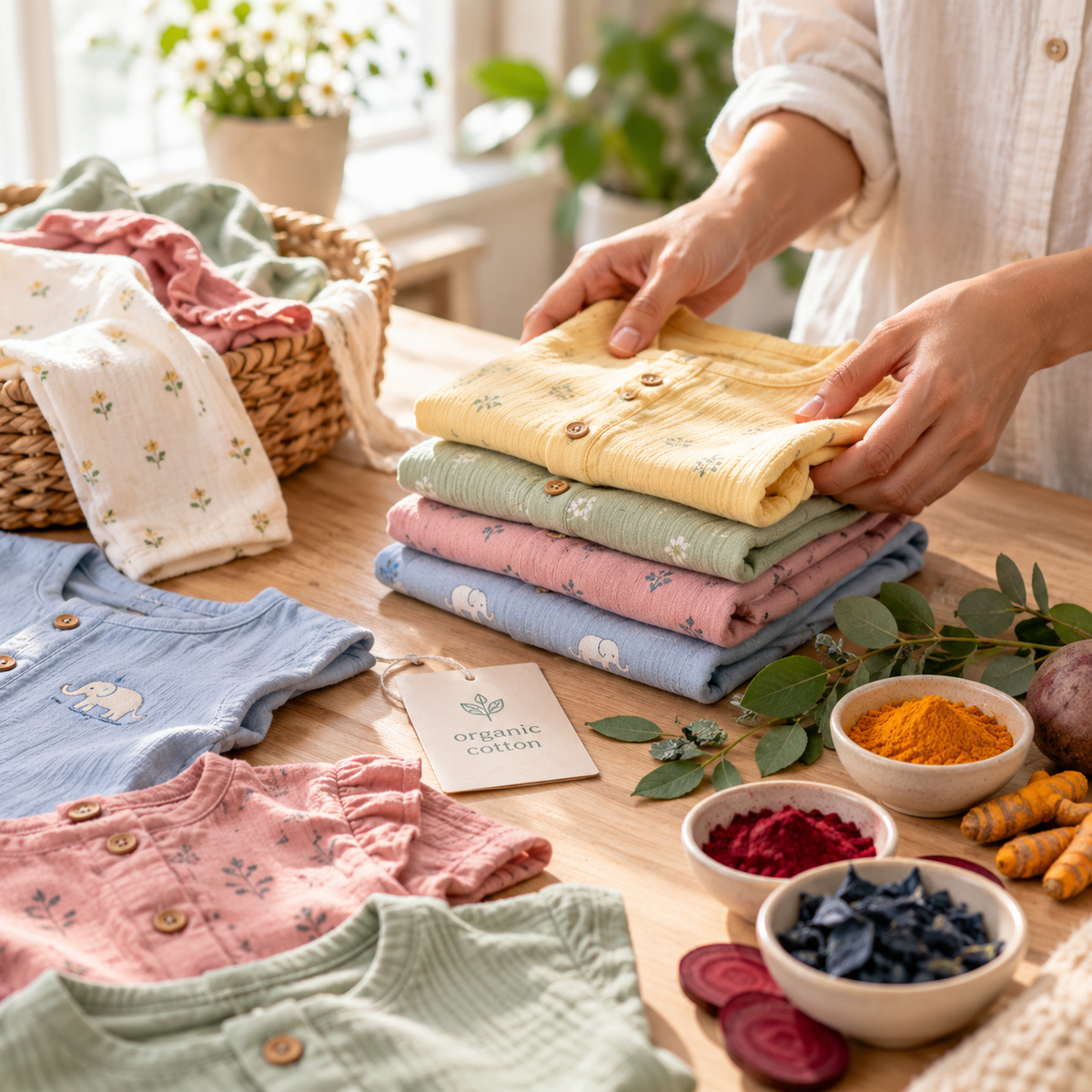
“Azo-free” and “non-toxic” are easy to print on a tag, so look for certifications that involve actual testing. Two worth knowing are OEKO-TEX Standard 100 and GOTS (Global Organic Textile Standard). Both test for banned aromatic amines and restrict toxic heavy metals. In practice, this confirms the garment is free of amine-releasing azo dyes, which is the meaning of “azo-free” used in this article.
A few quick habits help:
-
Read the label for certifications, not only the fiber content.
-
Wash new clothes first, which clears off loose surface residue.
-
Notice reactions. If a certain garment keeps bringing on redness or itching, it’s worth ruling out the dye.
The environmental side
This isn’t only about your child’s skin. Producing traditional azo dyes can release toxic wastewater into local water systems. Azo-free and low-impact dyeing processes are cleaner for the environment, so choosing them is a small way to avoid adding to that. For many parents, it’s a bonus on top of the skin benefits.
Where One Friday comes in
At One Friday, we know parents are thinking more carefully about clothing materials than they used to, and that includes what’s been done to them. Whichever brand you buy from, the habit worth building is asking what’s in your child’s clothes, and checking the product details and certifications before you buy.
The bottom line
This is one more thing worth checking when you buy kids clothing, especially for babies, toddlers who chew, and children with sensitive skin. It won’t take over your shopping routine, but a quick look at the label, a wash before the first wear, and a preference for certified fabrics add up over time.
You can explore everyday kids clothing at One Friday.
FAQ
1- What does azo-free dye mean?
Ans- Azo-free dye means a colorant made without azo compounds, which contain a nitrogen bond that can break down into aromatic amines, some linked to cancer and skin irritation, making it safer for clothing.
2- What are the side effects of azo?
Ans- Certain azo dyes can cause skin irritation, allergic contact dermatitis, eczema flare-ups, and rashes. Some break down into aromatic amines linked to cancer risk, which is why certain azo dyes are restricted in textiles.
3- How to test for azo dyes?
Ans - Azo dyes can’t be reliably tested at home. Accredited labs use methods like chromatography and mass spectrometry to detect banned aromatic amines. For parents, check for OEKO-TEX Standard 100 or GOTS certification labels instead.
Author Bio
The One Friday Editorial Team brings years of experience in children’s fashion and retail to deliver well-researched, trustworthy content. We carefully curate style tips, product insights, and practical advice to help parents make informed choices for their children’s wardrobes. Dedicated to quality and authenticity, we ensure every post reflects One Friday’s commitment to comfort, style, and the evolving needs of families.
Popular Searches
Blazer For Boys | Fashionable T shirt for girls | Kids Footwear | Small Girls Dress | Party wear Dress for Boys | Clothes for infants | Girls Party Shoes | Summer Wear for Kids | Kids accessories | Kids Clothing

Share:
Stylish Outfits Flexible Enough for the Dance Floor
Parenting Quotes for the Hard Days