


You've been there - you buy a pair of joggers, they look fine on the hanger, and by week two the knees are straining every time your kid sits cross-legged on the floor. Or the opposite happens: the fabric stretches out so much after one wash that everything's baggy and shapeless. Either way, it's the same underlying issue. The fabric stretch wasn't right for what a kid actually does all day.
Most of us don't think about this until it's already gone wrong. So here's what to actually look for.
Is All Stretchy Fabric Material the Same?
No, and this is where most buying mistakes happen. A cheap stretchy material might give you movement out of the box but lose its shape fast - it stretches once and just stays there, loose and baggy. A well-made stretch spandex fabric, on the other hand, is built to snap back to its original shape after every wash and wear.

The difference comes down to what's actually in the fabric. Pure cotton has almost no natural stretch - it moves a little because of the weave, but it won't recover. Woven fabric in general works this way: the threads are locked in a fixed crisscross pattern, so any give comes from the weave shifting slightly rather than the fibres themselves stretching - which is why woven garments feel far less flexible than knits. Add a small percentage of spandex (also called elastane or Lycra) into the blend, and you get fabric that stretches with movement and then pulls itself back into shape once your kid stops mid-cartwheel. Even 3-5% spandex in a cotton blend makes a noticeable difference in how a garment holds up.
How Much Fabric Stretch Does a Kid Actually Need?
It depends on the garment, and it's worth thinking about this piece by piece rather than assuming more stretch is always better.
For everyday play - running around, climbing on furniture, sitting however they want to sit - fabric needs decent give in at least one direction, usually across the width. This is called two-way stretch, and it's the baseline for leggings, joggers, and playwear tops. Cotton-spandex leggings, for instance, use a 95:5 cotton-to-spandex blend for exactly this kind of two-way give.
For anything with heavy bending and twisting - sports day uniforms, or clothes for a toddler who's basically never still - four-way stretch fabric (stretching both horizontally and vertically) holds up better and moves with the body instead of fighting it.
For dressier pieces, you don't need heavy stretch, but a small amount still helps. Kids move even in "smart" clothes, and zero-stretch fabric tends to show strain lines or tear at the seams faster.
How Do You Check Fabric Stretch Before Buying?
You don't need to know the exact spandex percentage to make a good call - a couple of quick checks tell you almost everything.
Pinch a small section of fabric between your fingers and pull gently. Good stretch fabric gives smoothly and returns to shape almost immediately. If it feels stiff and barely moves, or stretches out and stays wrinkled after you let go, it won't hold up.
Check the care label if there is one. Anything listing elastane, spandex, or Lycra alongside cotton or polyester is built for recovery, not just a one-time stretch.
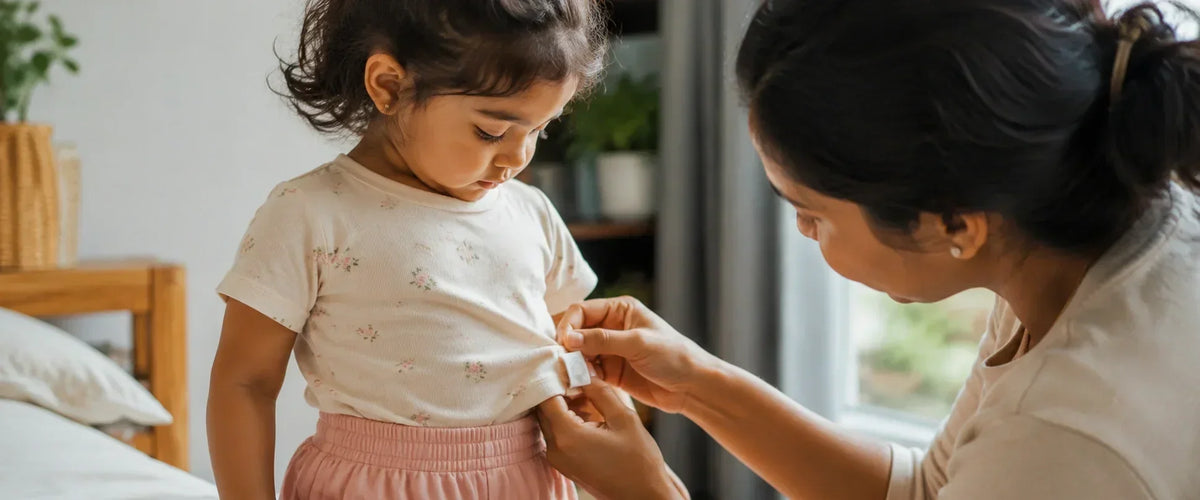
And don't ignore the cut. Even good stretch fabric can feel restrictive if the garment itself is cut too narrow through the knees, shoulders, or hips - fabric and fit both matter.
Why Does the Right Stretch Fabric Save You Money?
Clothes that don't stretch properly wear out in very specific spots - knees, underarms, waistbands - because the fabric is fighting movement instead of moving with it. That shows up as small tears, blown-out seams, and waistbands that lose shape early. Getting the stretch right the first time means fewer replacements, which matters when you're dressing a kid who's constantly moving and constantly growing.
At One Friday, we build our kidswear around this - because a kid who's climbing, running, and sitting cross-legged all day needs fabric that keeps up with them, not clothes that need babying to survive the week.
Looking for clothes that can actually keep up with an active kid? Check out One Friday's kidswear collection, built with stretch fabric that moves the way kids do.
Author Bio
The One Friday Editorial Team brings years of experience in children’s fashion and retail to deliver well-researched, trustworthy content. We carefully curate style tips, product insights, and practical advice to help parents make informed choices for their children’s wardrobes. Dedicated to quality and authenticity, we ensure every post reflects One Friday’s commitment to comfort, style, and the evolving needs of families.
Popular Searches
Blazer For Boys | Fashionable T shirt for girls | Kids Footwear | Small Girls Dress | Party wear Dress for Boys | Clothes for infants | Girls Party Shoes | Summer Wear for Kids | Kids accessories | Kids Clothing

Share:
Baby Clothes for Boys: A Fit and Fabric Guide for Parents
What Is OEKO-TEX? Understanding Textile Safety Labels