


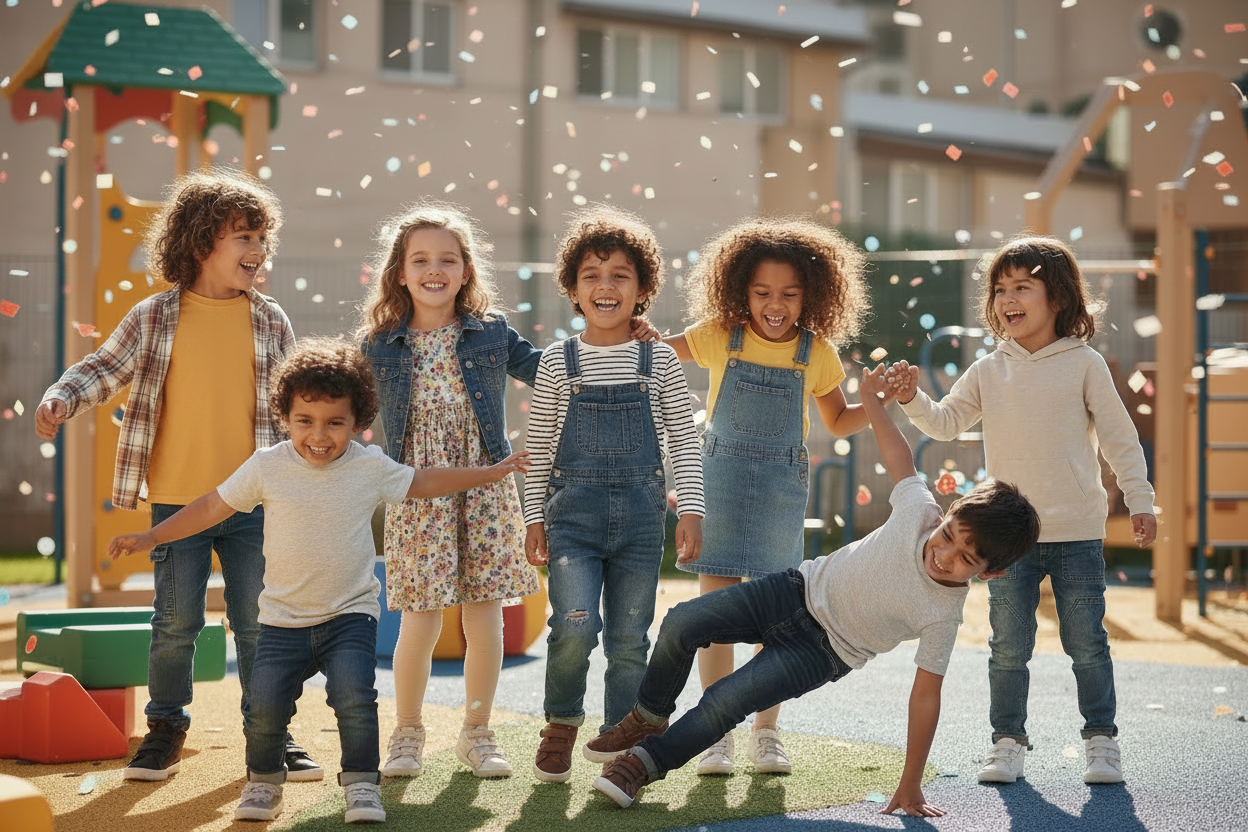
Most of a kid's wardrobe isn't the birthday outfit or the one nice dress worn twice a year. It's the five or six things they reach for every single day - the t-shirt that has to survive both school and the playground, the joggers that get worn three days in a row because they're the "comfortable ones," the shorts that shouldn't feel like a punishment in the heat. That's the part of the wardrobe that actually gets tested, and it's usually the part parents end up rebuying the most, without quite knowing why.
If you've ever felt like you're replacing the same basics over and over, it's rarely bad luck. It's almost always the fabric or the fit not being built for daily use in the first place.
What Should You Actually Look for in Everyday Kids Clothing?
The following three factors are what determine whether clothes can endure constant wear-and-tear:
-
Fabric quality
-
Fit
-
Durability after repeated washing
Fabric needs to breathe and move without falling apart. Cotton or cotton blends are usually the safer choice because they're gentle on skin and don't trap heat the way synthetic-heavy fabrics can - which matters if you've ever dealt with a cranky, overheated kid refusing to wear something.
Fit needs enough room to move without being so loose it gets in the way, which is where elastic waistbands and slightly relaxed cuts through the knees and shoulders help. And durability is the one thing most parents don't check until it's too late - until the knees have already worn through or the color's already gone patchy.
Which Fabrics Actually Hold Up to Daily Wear (Instead of Falling Apart in Weeks)?
Not all "soft cotton" behaves the same after ten washes, and this is usually where the money gets wasted. Plain cotton feels comfortable off the shelf but can lose shape and color fast if it isn't well finished - which is exactly how a shirt looks fine in the store and grey within a month. Cotton, when mixed with small quantities of spandex or elastane helps provide elasticity that will bounce back into shape rather than sagging. It is important that the kids' clothes can accommodate the various movements they make while sitting, climbing or crawling throughout the day. Interlock and pique knits do not lose their shape as easily as single-jersey fabric does.
If you're comparing two similar-looking garments and unsure which one's worth the money, the fabric weight and weave usually tell you more than the price tag does. Thin, see-through fabric rarely survives a full school term, no matter how nice it looks new - and that's a cost you only discover after it's too late to return it.
How Many Everyday Outfits Does a Kid Actually Need?
More than most parents plan for - mainly because kids go through clothes faster than adults do. Spills, sweat, outdoor play, and growth spurts all shrink the usable wardrobe faster than expected, which is why the same five outfits seem to be in permanent rotation no matter how much you've bought. A reasonable baseline is 7-10 everyday tops and 5-7 bottoms - enough to get through a full week without a laundry emergency, plus a buffer for the inevitable stain or tear.
It's usually smarter to buy fewer, better-made basics than to stock up on cheap ones that all wear out around the same time and need replacing in one expensive batch.
Does Everyday Wear Have to Be Boring to Be Practical?
No - and this is a worry a lot of parents have that doesn't need to be true. Everyday clothing can still have color, prints, and personality; practical requirements like breathable fabric, good stretch, and sturdy stitching don't conflict with a kid actually liking what they're wearing. In fact, clothes a kid likes wearing tend to be worn more evenly throughout the week, rather than piling up unworn while the same two favourites get overworked and wear out first.
What's the One Mistake Parents Make Buying Everyday Clothes?
Buying based on how something looks on a hanger or in a photo, rather than how it'll hold up to real use. A t-shirt that looks great folded on a shelf can still be too thin to survive a season, or cut in a way that restricts movement the moment a kid tries to climb something - and by the time you notice, it's already been worn and can't go back. The better habit is checking the fabric composition, feeling for stretch and recovery in-store, and picturing the garment mid-cartwheel rather than mid-photoshoot.
At One Friday, everyday wear is where we spend the most time getting the details right - fabric that breathes, stretch that recovers, stitching that survives actual kid behaviour - because this is the part of the wardrobe doing the real work, day after day, and the part parents most want to stop rebuying every few months.
Looking for everyday basics that can actually keep up? Check out One Friday's kidswear collection, built for daily wear and real movement.
Author Bio
The One Friday Editorial Team brings years of experience in children’s fashion and retail to deliver well-researched, trustworthy content. We carefully curate style tips, product insights, and practical advice to help parents make informed choices for their children’s wardrobes. Dedicated to quality and authenticity, we ensure every post reflects One Friday’s commitment to comfort, style, and the evolving needs of families.
Popular Searches
Blazer For Boys | Fashionable T shirt for girls | Kids Footwear | Small Girls Dress | Party wear Dress for Boys | Clothes for infants | Girls Party Shoes | Summer Wear for Kids | Kids accessories | Kids Clothing

Share:
Stylish Trending Dresses for Girls: Style Guide for All Occasions